Publications de
Centre for Research and Expertise in Social Gerontology (CREGÉS) - Répertoire des connaissances en proche aidance
Besoin de soutien? →
APPELEZ AU 811 (Info-Santé/Info-Social). Si vous avez besoin de soutien, avez des inquiétudes ou des questions au sujet de votre santé ou celle d’un⋅e proche, composez le 811 afin de parler avec un⋅e professionnel⋅le de la santé ou un⋅e intervenant⋅e, 24 heures par jour, 7 jours par semaine. C’est gratuit et confidentiel.
Si vous souhaitez parler à un⋅e professionnel⋅le spécialisé⋅e en proche aidance en lien avec une situation difficile, obtenir des références ou pour poser des questions, contactez le service Info-Aidant de l’Appui.
Ouvert du lundi au vendredi de 8h à 18h.
Pour obtenir du soutien et de l’information pour les personnes proches aidantes dans votre région, consultez le répertoire de ressources de l’Appui ou la liste des organismes membres de Proche aidance Québec.
Supported Decision Making with Persons with Dementia
This webinar (33 min) presents the results of a research project on supported decision-making among people with dementia and their care partners.
COVID-19 : Mieux soutenir les personnes proches aidantes de résidents en CHSLD
This webinar (in French) examines how COVID-19 affected the family caregivers of seniors living in public long-term care centres (CHSLD). It discusses the caregivers’ main needs in the context of COVID-19 and explores various inspiring practices for meeting them.
Outils d’évaluation des risques et des besoins des personnes proches aidantes
This set of documents presents two tools for assessing caregiver needs and the associated risks, each accompanied by a user guide.
Entre les services, les bonnes pratiques et les mesures : mise en perspective du soutien aux personnes proches aidantes
This research report (140 pages, in French) examines the support available to caregivers in Quebec, Canada and internationally.
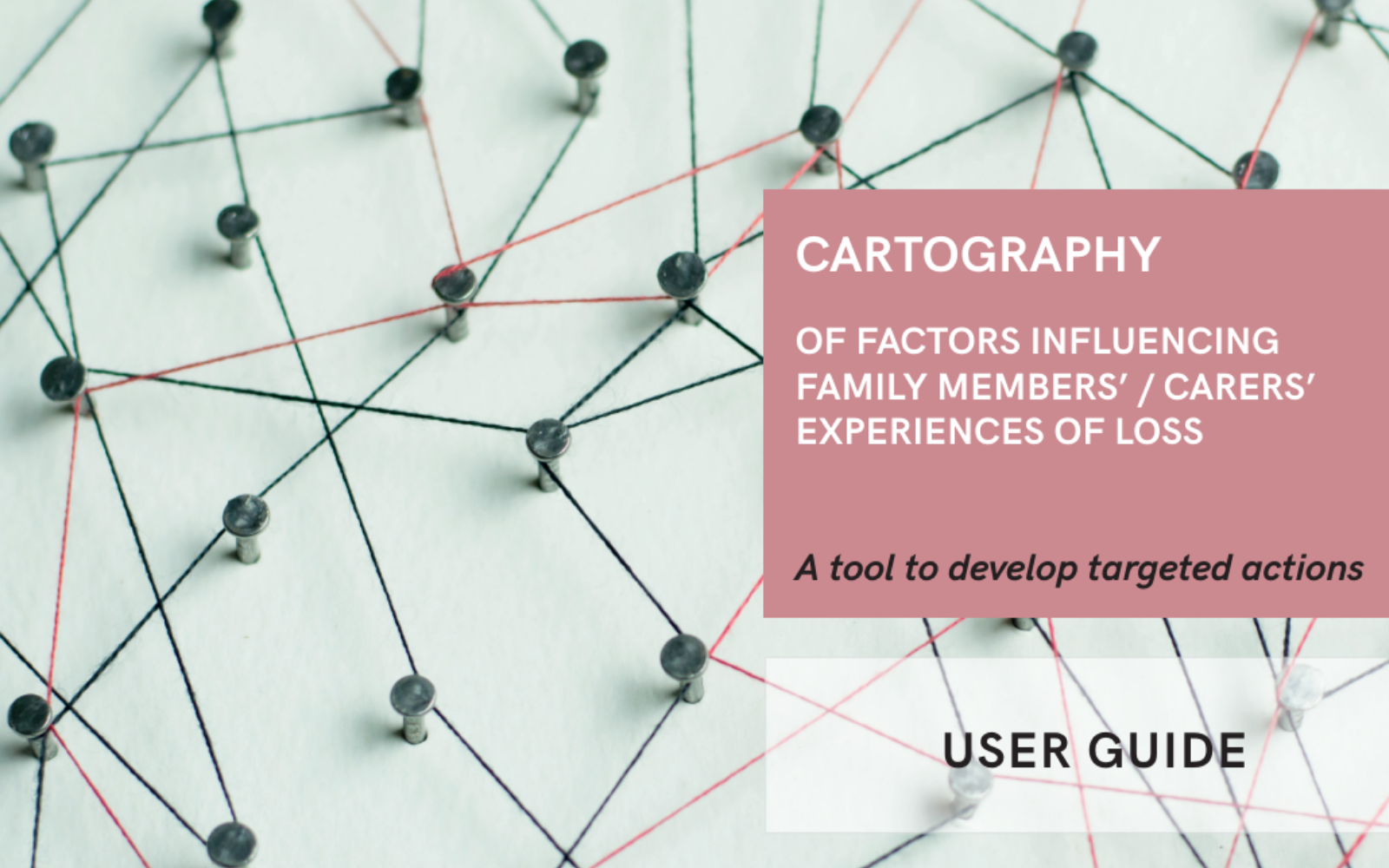
Cartography of Factors Influencing Family Members/Carers’ Experiences of Loss. A Tool to Develop Targeted Actions. User Guide.
This user guide presents and explains the cartography of factors influencing how carers and family members experience loss. This cartography is a tool that can be used to identify individuals apt to encounter challenges during bereavement and also identifies resources in their environment that can provide further support.
Revue systématique sur les interventions de soutien pour les proches aidants
This webinar (54 min) presents an overview of effective and acceptable support services available to caregivers.
Fact Sheet: Financial Support for Caregivers
This fact sheet presents a round-up of the financial support currently available in Quebec for caregivers. It also identifies the challenges caregivers encounter in terms of accessing support as well as how support can impact their lives.
Outil d’intervention en matière de maltraitance envers les proches aidants
This webinar (50 min, in French) aims to inform and equip health social services professionals and personnel who work with caregivers and their families about the mistreatment of caregivers.
Personnes proches aidantes de résidents des milieux d’hébergement et de soins de longue durée en contexte de COVID-19
This report (in French) outlines the primary needs of those who were the caregivers of long-term care facility residents during the pandemic and suggests various possible approaches to managers and decision-makers.
The Experiences of Social Exclusion and Inclusion Among People Aging with Neurodiversity and Their Families
This web feature presents the publications resulting from the research project, “Experiences of Social Exclusion and Inclusion Among People Aging with Neurodiversity and Their Families.”
Explorer l’impact de la pratique de la présence attentive (mindfulness) sur la réduction des pensées négatives répétitives chez les personnes proches aidantes
This scientific report (in French) presents the results of a literature review exploring interventions aimed at reducing repetitive negative thinking (RNT) among the caregivers of people living with a major neurocognitive disorder.