

Reducing the sense of obligation among caregivers: strategies for professionals and practitioners

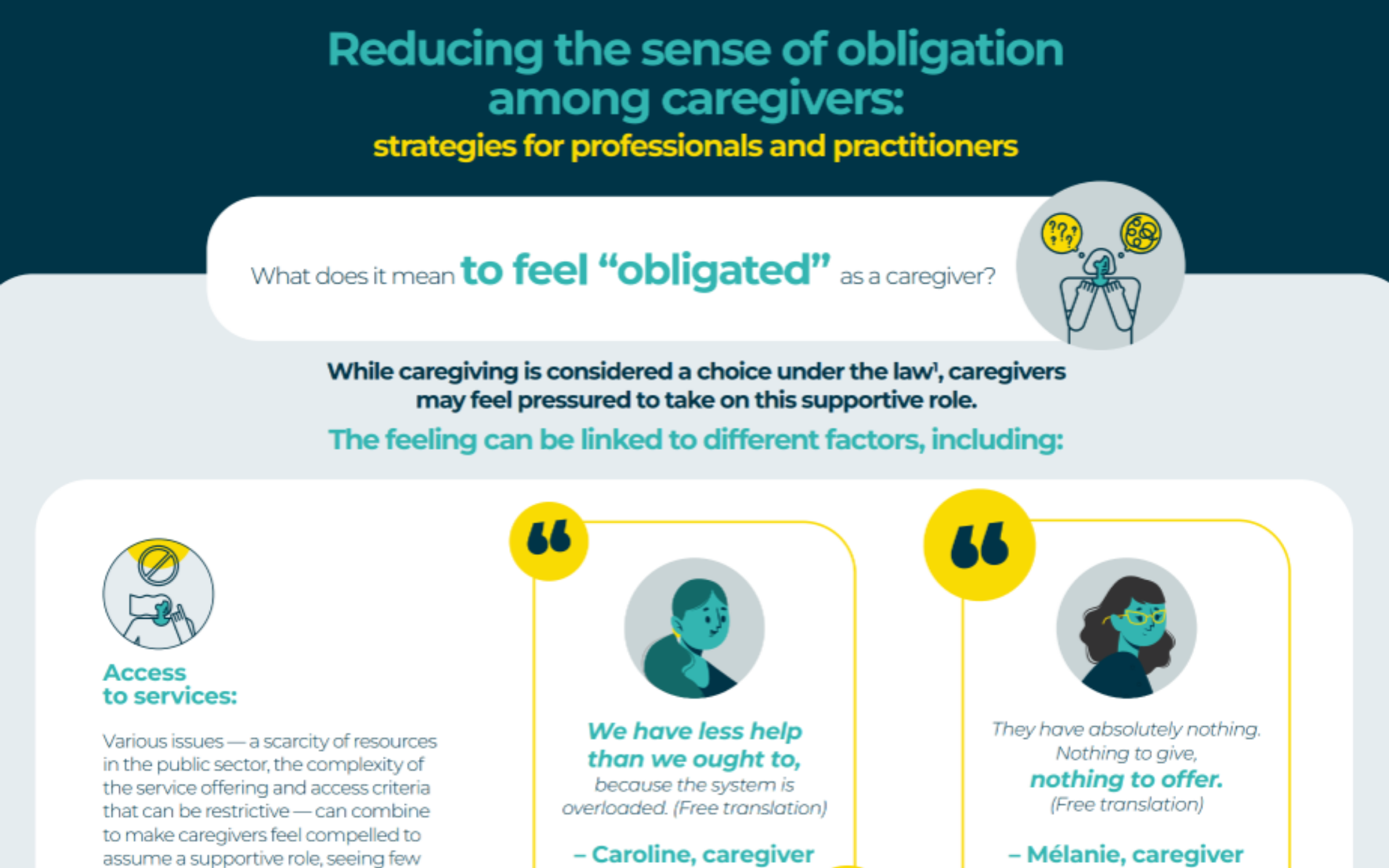
This fact sheet (2 pages) explores the sense of obligation that caregivers may feel and the factors that can exacerbate the feeling. It offers professional strategies for helping caregivers cope with feeling “pressured” to assume the role and exploring their options.

Year: 2025
Languages: English, French
Format: Infographic
Dimension(s) of caregiving:
  • Analysis of caregiving support
  • Society and caregiving

Besoin de soutien? →

APPELEZ AU 811 (Info-Santé/Info-Social). Si vous avez besoin de soutien, avez des inquiétudes ou des questions au sujet de votre santé ou celle d’un⋅e proche, composez le 811 afin de parler avec un⋅e professionnel⋅le de la santé ou un⋅e intervenant⋅e, 24 heures par jour, 7 jours par semaine. C’est gratuit et confidentiel.

Si vous souhaitez parler à un⋅e professionnel⋅le spécialisé⋅e en proche aidance en lien avec une situation difficile, obtenir des références ou pour poser des questions, contactez le service Info-Aidant de l’Appui.

Ouvert du lundi au vendredi de 8h à 18h.

1 855 852-7784

[email protected]

www.lappui.org

Pour obtenir du soutien et de l’information pour les personnes proches aidantes dans votre région, consultez le répertoire de ressources de l’Appui ou la liste des organismes membres de Proche aidance Québec.

!
Image Diminuer le sentiment d'obligation FR - Répertoire

This fact sheet (2 pages) from the Quebec Observatory on Caregiving is aimed at professionals who support caregivers. Exploring the sense of obligation that caregivers may feel and the factors that can exacerbate the feeling, it offers professional strategies for helping caregivers cope with feeling “pressured” to assume the role and exploring their options.

The document is based on the report, Recognition Without Coercion: Navigating Need, Obstacles and Ethical Dilemmas in Caregiver Recognition and Self-Identification (2025), by the Quebec Observatory on Caregiving.

Special thanks to Marie Larose, Marie Lorange and Audrey-Maude Rainville for their valuable input in reviewing and strengthening this fact sheet.